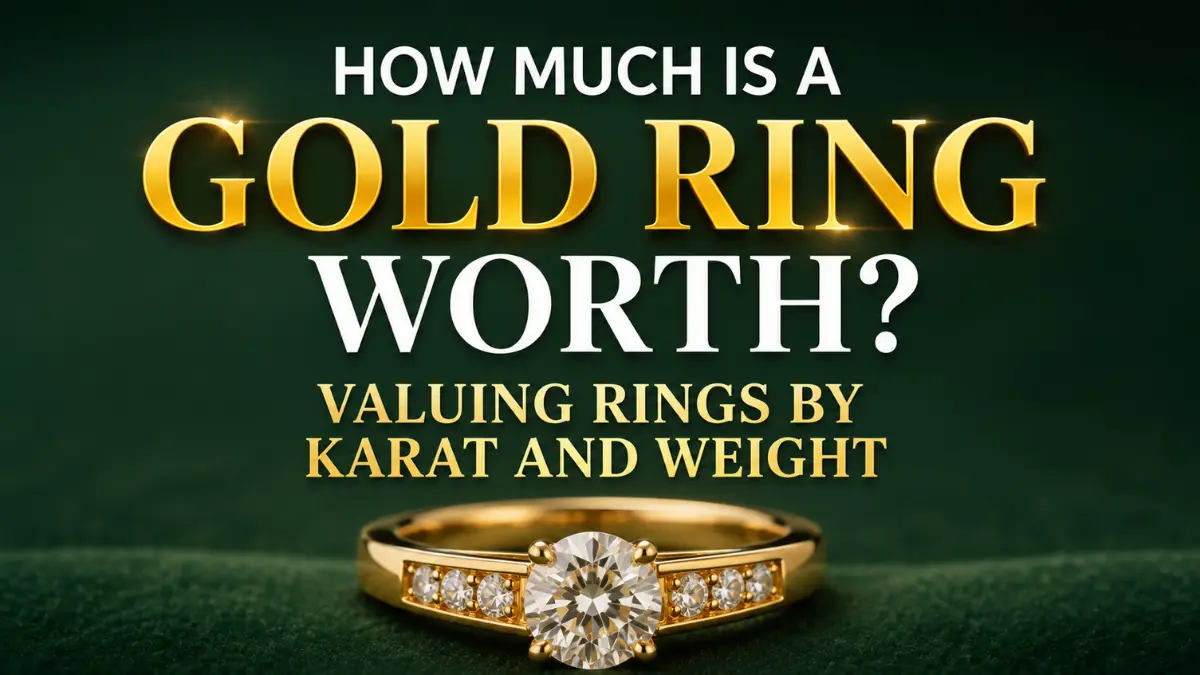
If you’re asking how much is a gold ring worth, chances are you’re not just curious – you’re about to sell one, and you want to know your gold ring value before you walk into a shop. That’s the right instinct. This guide covers two things: how to actually calculate what your ring is worth and how to make sure whoever buys it pays you fairly for it. Getting the number right is only half the job. The other half is finding a buyer who won’t quietly shortchange you on it, and we’ll walk through exactly how to spot one.
What Determines How Much a Gold Ring Is Worth
A gold ring’s value rests on a handful of factors, and once you know them, the math is straightforward.
Karat and purity. The karat stamp inside your ring (10k, 14k, 18k, and so on) tells you what fraction of the metal is actually gold, since pure gold is too soft to wear alone and is alloyed with other metals for durability. A higher karat number means a higher gold content and therefore a higher gold ring value for the same weight.
Weight in grams. Value scales directly with how much metal is actually there. Buyers weigh rings in grams (sometimes converted from pennyweights or troy ounces), and this weight is multiplied straight into the valuation formula.
The current gold price (spot price). Gold trades on a live global market, so the spot price per gram in CAD changes daily and sometimes hourly. Your ring’s value moves with it, though the price a buyer actually pays you is lower than that headline spot price for reasons we’ll cover below.
Why stones and design are valued separately. Diamonds, gemstones, and craftsmanship don’t melt down into gold, so they’re appraised on their own merits-clarity, carat, cut, and brand-separately from the metal itself.
How to Calculate Your Gold Ring's Value
The formula is weight × purity × spot price. The core calculation is ring weight in grams × karat purity fraction × current gold spot price per gram in CAD. Purity fractions are fixed and easy to look up (14k is 58.3%, 18k is 75%), while the spot price needs to be checked on the day you’re calculating, since it never sits still for long.
A worked example (step by step). Say a ring weighs 5 grams and is stamped 14k. Multiply 5 grams by 0.583 (14k purity) to get 2.915 grams of pure gold content. Multiply that figure by whatever the spot price per gram happens to be that day, and you have the ring’s melt value-the baseline before any buyer’s margin is applied.
Melt value vs resale value. Melt value is the theoretical maximum if the gold were refined and sold at spot price with zero costs. In practice, no buyer pays 100% of it – refining, testing, and profit margin all eat into the number, which is why the percentage a buyer offers against melt value matters more than the number itself.
Gold Ring Value by Karat
How much is a 10k gold ring worth? At 41.7% purity, 10k is the lowest common karat used in jewelry, so a 10k ring will always be worth less per gram than a higher-karat ring of the same weight. It’s more durable and scratch-resistant, but that’s a design trade-off, not a value one.
How much is a 14k gold ring worth? A 14k gold ring is 58.3% pure gold, which is the most common karat for everyday rings in North America because it balances durability with a meaningful gold content. To find how much a 14k gold ring is worth, take its weight in grams, multiply by 0.583, then multiply by the day’s spot price per gram.
How much is an 18k gold ring worth? An 18k gold ring is 75% pure, noticeably richer in color and gold content than 14k, which is why it’s popular for engagement and wedding rings. To work out how much an 18k gold ring is worth, multiply its weight by 0.75, then by the current spot price-the same formula, just a higher purity fraction.
22k and 24k rings. At 91.7% and 99.9% purity, respectively, 22k and 24k rings carry a much higher gold content per gram. Still, they’re also softer and less common in everyday jewelry, appearing more often in investment pieces or specific cultural styles.
How Much Is My Ring Worth If I Sell It Today?
What reputable buyers actually pay (a transparent share of melt). So how much is my ring worth if I actually sell it, versus what the melt-value math says on paper? Reputable buyers typically pay a clearly disclosed percentage of melt value – often somewhere in a broad “most of it” range depending on the buyer type – and they’ll explain that percentage upfront rather than quoting a mystery lump sum. If a buyer won’t tell you what percentage of melt value their offer represents, that’s worth noting before you agree to anything.
Where scrap gold ring value fits in. If a ring is broken, badly worn, or has no resale appeal as jewelry, it’s usually sold for scrap gold ring value-essentially melt value only, with no premium for design or brand. Scrap pricing sits at the floor of what a ring can fetch, which is why it’s worth confirming whether your ring might be worth more intact than melted down before you sell it as scrap by default.
How to Identify a Legitimate, Reputable Gold Buyer
This is the part most guides skip, and it’s the part that actually protects your payout.
Licensing and real physical premises. A legitimate buyer operates from a real, verifiable location and holds any licensing required in your province. Be cautious of pop-up buyers or purely mobile operations with no fixed address to return to.
Transparent pricing tied to the live spot price. Reputable buyers show you the day’s spot price and explain their percentage-of-melt offer against it, rather than naming a flat number with no reference point you can check.
Weighing and testing in front of you. You should be able to watch your ring get weighed and tested-whether by acid test, electronic tester, or XRF-rather than have it disappear into a back room and come back with a number you can’t verify.It helps to know how gold buyers test purity – acid testing, electronic testers, and XRF each work differently.
Written quotes and proper receipts. A legitimate buyer gives you a written, itemized quote before you agree to sell, and a proper receipt after, recording the weight, purity, price used, and amount paid.
Verifiable reviews and reputation. Check independent reviews, the Better Business Bureau standing, and how long the buyer has operated-a real trading history is harder to fake than a polished storefront.
Red Flags and Common Gold-Buying Scams
- Pressure to sell on the spot. Any buyer pushing you to decide immediately, with no time to get a second quote, is working against your interest, not for it.
- Refusing to weigh or test in your view. If your ring is taken out of sight to be weighed or tested, you have no way to confirm the numbers you’re given.
- Vague or today only pricing. Urgent, unexplained special offers are a pressure tactic, not a genuine reflection of the market.
- Rigged scales and hidden deductions. Some scales are tampered with, or fees get subtracted after the fact without being disclosed upfront.
- Cash with no paperwork. A cash-only deal with no receipt leaves you with no record of what was weighed, tested, or agreed, and no recourse if something’s wrong.
How to Compare Offers and Get a Fair Price
Before you sell, get at least two or three quotes so you have something to compare against. Look up the day’s gold spot price in CAD beforehand so you can judge each offer against a real benchmark rather than taking a buyer’s word for it. Different buyer types also tend to pay differently:
| Buyer Type | Typical Payout vs Melt Value | Best For |
|---|---|---|
| Local jeweller | Moderate to high, especially if they want the piece for resale | Rings in good condition, or building a relationship for future sales |
| Refiner | Higher, since they deal in raw gold with fewer middlemen | Scrap, broken, or heavily worn gold |
| Pawn shop | Lower, geared toward quick cash | Fast, no-questions transactions |
| Online buyer | Varies widely; convenient but harder to verify testing in person | Comparing a baseline quote before an in-person sale |
Conclusion
At its core, how much a gold ring is worth comes down to weight times purity times the day’s spot price – a formula that stays the same whether your ring is 10k or 24k. But that number is only half the story; finding a buyer who pays a fair, transparent share of it is the other half. Do both, and you’ll walk away from selling your gold ring with a price you actually understand and trust.
FAQ
How much is a gold ring worth per gram?
It depends on the karat and the day’s spot price. Multiply the spot price per gram in CAD by the karat’s purity fraction (for example, 0.583 for 14k) to get the per-gram value of your specific ring’s gold content, before any buyer’s margin is applied.
How much is my ring worth if it has diamonds or gemstones?
The gold and the stones are valued separately. The metal is worth its melt value based on weight and purity, while diamonds or gemstones are appraised on their own factors like clarity, carat, and cut; then the two figures are combined for a total.
Do gold buyers pay the full melt value of a ring?
No. Melt value is a theoretical ceiling; refining costs, testing, and profit margin mean buyers pay a percentage of it instead. Reputable buyers disclose that percentage clearly, so you can judge whether an offer is fair.
Is a 14k gold ring worth more than an 18k ring?
Not for the same weight-18k is 75% pure versus 14k’s 58.3%, so an 18k ring of identical weight contains more gold and is worth more in melt value. A heavier 14k ring can still out-value a lighter 18k one, though, since weight matters just as much as purity.