A jar of old coins, an inherited tin, a single heavy coin found in a drawer: whichever you have, the question is the same. How much is a silver dollar worth? The coin looks ordinary, but it may hold real silver, and it is easy to check. This guide covers Canadian silver dollars first, since that is what most Canadian readers are holding, then the US Morgan and 1921 dollars. The answer comes in the next block, followed by weights you can use to spot a fake.
Silver Dollar Value: Melt Value vs Collector Value
Every silver dollar value has two parts: melt value and collector value.
Melt value is the coin’s pure silver content multiplied by the live spot price. It is the floor, because a dealer can weigh the coin and pay for its silver. Spot silver stood near US$56.88 per troy ounce on October 20, 2026, but the figure changes daily, so check a dated source such as the current silver price before doing any sums.
Collector (numismatic) value is the extra a buyer pays for rarity, date, mint mark, and condition.
The rule is simple. Common and worn coins sit near melt, while rare dates and high-grade coins sit well above it. Most coins from a jar or an inherited tin fall in the first group, which is still a good result, because it is real silver.
How Much Is a Canadian Silver Dollar Worth?
Most Canadian silver dollars are worth their silver, with a premium only for scarce dates and good condition. Which one you hold depends on the year stamped on it.
1935 to 1967: the 80% silver dollars
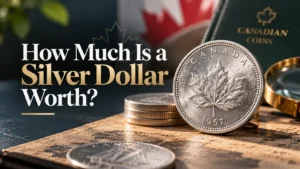
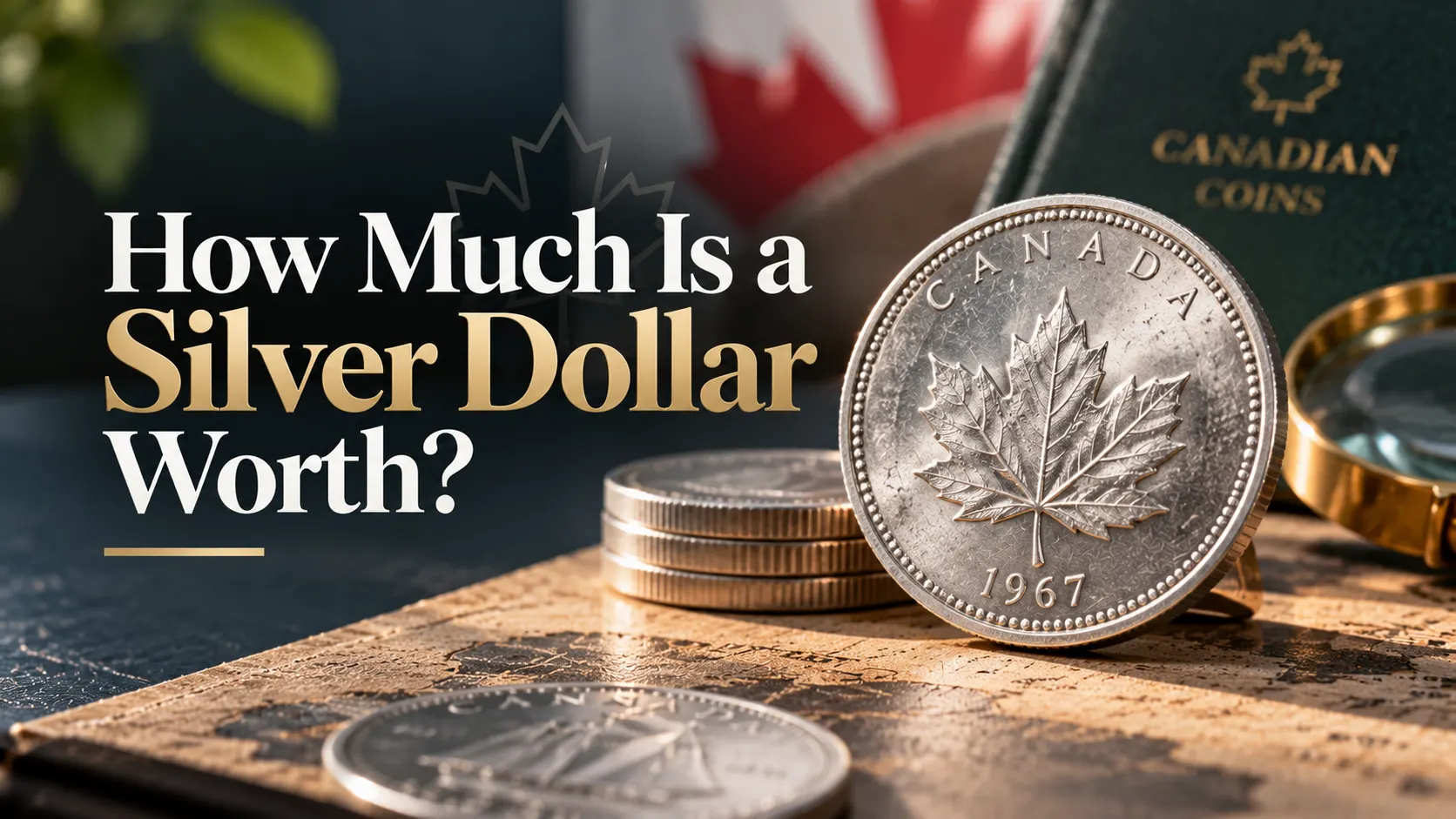
These are the coins most people find. They are 80% silver and 20% copper, weigh about 23.33 g, and hold 0.6 troy ounces of pure silver. The Voyageur design carried the series, with commemorative reverses along the way, such as the 1958 totem pole and the 1967 goose. Common dates in worn condition trade on silver content, so melt value is the number to start with.
1968 onward and the collector dollars
The Royal Canadian Mint moved general circulation coins to nickel in 1968, so circulating dollars from 1968 hold no silver and are worth face value. The exception is the collector dollars sold to collectors from 1971. These were struck in 50% silver from 1971 to 1991, each holding 0.375 troy ounces of pure silver. Later collector dollars, from 1992 on, use sterling or fine silver, so check the year and confirm the composition before you value one.
Key dates that beat melt
1948 is the scarce one, and the 1947 varieties are also sought after. For most coins, though, condition matters more than date, so a sharp, unmarked coin beats a worn one of the same year.
Canadian dollar | Silver | Pure silver | What drives value |
1935 to 1967 circulation dollar (23.33 g) | 80% | 0.600 troy oz | Silver content, plus rare dates and grade |
1968 onward circulation dollar | None (nickel) | 0 | Face value only |
1971 to 1991 collector dollars | 50% | 0.375 troy oz | Silver content, plus collector demand for the design and finish |
1992 onward collector dollars | Sterling or fine silver | Varies by year | Silver content (confirm the year), plus collector demand |
Morgan Silver Dollar Value
US silver dollars are priced differently from Canadian ones, because they hold more silver and the collector market is much larger.
What a Morgan dollar is worth (1878 to 1921)
A Morgan is 90% silver, weighs 26.73 g, and holds about 0.7734 troy ounces of pure silver. Common dates in worn grades trade close to melt plus a small collector premium. A handful are worth far more, the best known being the Carson City coins and the 1893-S. Check the reverse for a mint mark: it sits above the word DOLLAR. Because grade moves the price sharply, a dealer or grading service should confirm anything that looks scarce.
1921 US Silver Dollar Value: Morgan and Peace
1921 is the most common Morgan date, not a rare one. Three mints struck it (Philadelphia, Denver and San Francisco), for tens of millions of coins together. Being the last year of issue does not make it scarce. Circulated coins sit near melt, and mint state examples are common up to MS65 but get much scarcer from MS66, which is where premiums climb.
1921 is also the first year of the Peace dollar, so the two coins are easy to confuse. The Morgan shows a Liberty head with a cap and an eagle on the reverse. The Peace dollar shows a radiate Liberty. Both weigh 26.73 g and are 90% silver, so weight cannot separate them. The design can.
How Much Does a Silver Dollar Weigh?
Weight is the fastest way to check, and silver dollar weight differs a lot between coin types. Compare your coin to the standard figures below.
Coin | Total weight | Silver purity | Pure silver |
Canadian 1935 to 1967 dollar | 23.33 g | 80% | 0.600 troy oz |
Morgan and Peace dollars | 26.73 g | 90% | about 0.7734 troy oz |
Eisenhower silver collector issue | 24.59 g | 40% | about 0.3161 troy oz |
American Silver Eagle (bullion coin) | 31.1 g | 99.9% | 1 troy oz |
The Silver Eagle is listed only because people confuse it with older dollars. It is a modern bullion coin, not a vintage dollar.
A troy ounce is 31.1 g and is the unit used for precious metals. An everyday ounce is 28.35 g, so do not mix the two when you work out silver content.
Weigh the coin on a scale accurate to 0.01 g. A difference of a few hundredths of a gram is normal wear. A coin that is a gram or more off the standard weight is a red flag and deserves a second opinion.
What Changes the Price: Grade, Date and Mint Mark
Three things decide how far a coin sits above its silver content, and none of them is hope.
Grade. An uncirculated coin beats a worn one, and the jump can be large. Grading services use the 1 to 70 Sheldon scale, and the top grades, MS-60 to MS-70, cover coins that never circulated.
Date and mint mark. These decide scarcity. The same design can be common in one year and scarce in the next.
Cleaning. Do not clean the coin. Cleaning damages the surface and removes collector value.
Errors and varieties exist too, but only a dealer or grading service can confirm them.
How to Work Out What Yours Is Worth
- Identify the coin and the year. Match the country, design and date to the tables above.
- Weigh it and check the silver content. Weigh to 0.01 g, compare with the weight table, and note the pure silver in troy ounces.
- Multiply by the live silver price. Multiply the pure silver in troy ounces by the current spot price per troy ounce, then convert to Canadian dollars if the price is quoted in US dollars.
- Check the date and condition for a premium. Look for the scarce dates named above and for sharp, unmarked surfaces.
Worked example. Take a Canadian 80% dollar with 0.600 troy ounces of silver. Spot silver was US 56.88 per troy ounce on October 20,2026,so 0.600 times 56.88 is about US34.13. At the Bank of Canada rate of 1.4196 Canadian dollars per US dollar on October 20, 2026, that is roughly C$48.45. This is an illustration only, because both prices change every day.
Where to Sell Silver Dollars in Canada
You do not need to rush. A few habits protect you whichever buyer you choose:
- Get at least two offers. Prices vary between buyers, and a second quote shows you the range.
- Ask for the offer to be explained. The buyer should say how much of the price is melt value and how much is collector value.
- Watch the testing. A reputable dealer weighs and tests the coin in front of you, which is easier to do at a store counter than by mail. If you are in the Greater Toronto or Hamilton area, you can have coins weighed and tested in person at our Whitby and Burlington locations.
- Consider grading first for rare coins. If you have a scarce date or a high-grade coin, grading before you sell can make the value clearer.
- If you hold a large lot, such as rolls or bags of coins, ask each buyer how they price bulk silver before you commit. For a step-by-step on the whole process, see our guide on how to sell silver in Canada.
Conclusion
Silver content is the floor, and rarity and condition lift a coin above it. Melt value tells you what the metal is worth today, and collector value is the extra a buyer pays for a scarce date or a sharp, unmarked coin. Weigh your coins, work out the silver, and check the date. If you would like an honest assessment, bring or describe your coins and we will help you understand what they are and roughly what they are worth. If your silver dollars turn out to be common-date coins you would rather sell, our silver coin buying service can price them for you. Holding gold as well? See how much a gold coin is worth.
FAQ
Are Canadian silver dollars worth anything?
Yes, if the date is 1935 to 1967. Those dollars are 80% silver and hold 0.6 troy ounces, so they are worth at least their silver content. Circulating dollars from 1968 on are nickel and worth face value, while collector dollars from 1971 to 1991 hold 0.375 troy ounces of silver.
How can I tell if my silver dollar is real silver?
Start with weight. If you are wondering how much a silver dollar weighs, the standard figures are in the table above: 23.33 g for a Canadian 80% dollar and 26.73 g for a Morgan or Peace dollar. A gram or more off is a red flag. A dealer can then test the coin for you.
Should I clean my silver dollars before selling?
No. Cleaning scratches the surface and strips the natural finish, which lowers collector value. A common coin sold only for its silver loses little, but a scarce date can lose a lot. Leave the coin as you found it and let the buyer assess it.
Is an Eisenhower dollar made of silver?
Only some are. The collector issues struck at San Francisco (marked S) are 40% silver, weigh 24.59 g and hold about 0.3161 troy ounces. Eisenhower dollars made for circulation are copper-nickel and hold no silver.