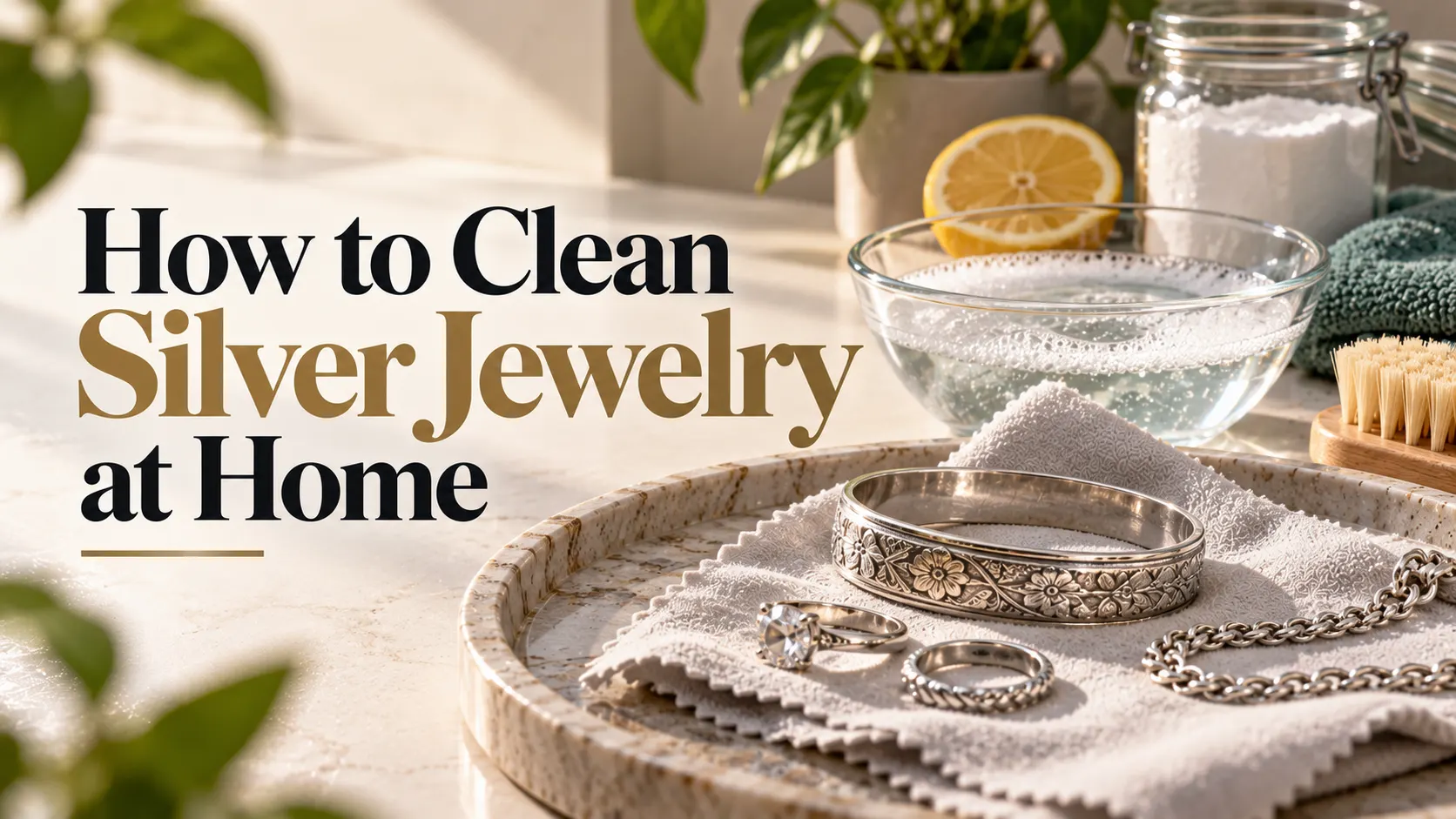
Knowing how to clean silver jewelry safely starts with the piece itself. Silver rings, chains and earrings can turn dull or dark even when stored carefully, and the right method depends on how much tarnish has built up and whether the piece is solid silver, plated or set with stones.
This guide covers two household cleaning methods, polishing, and care for rings and coins. It also explains what to avoid and when a piece is better left to a jeweller. If your pieces are gold rather than silver, see our companion guide on how to clean gold jewellery at home.
Know Your Silver Before You Clean It
Check the piece before choosing a method. A 925 or Sterling mark usually indicates sterling silver, which contains 92.5% silver, while a 999 mark indicates fine silver. Because fine silver has no copper in the alloy, it tarnishes more slowly than sterling. Plated pieces may carry marks such as EP or EPNS (electroplated, or electroplated nickel silver), or have no clear silver mark at all.
Silver itself is not magnetic, so a piece that sticks to a magnet is likely plated over another metal. The magnet test alone, however, cannot confirm whether a piece is solid silver or plated.
Use gentle cleaning for plated jewellery, because aggressive polishing can wear through its thin silver layer. Do not soak pieces with pearls, opals or turquoise. If you cannot identify the metal, finish or setting, ask a jeweller before trying a tarnish-removal treatment. For further guidance, consult the Canadian Conservation Institute’s silver care and tarnish removal advice.
Why Silver Tarnishes
Tarnish forms when silver reacts with sulfur-containing gases in the air, creating a dark surface layer that on pure silver is mainly silver sulfide. It is a surface change, not necessarily permanent damage, but removing it repeatedly can gradually remove some silver too.
Humidity, perfume, hairspray, lotion and some household products can speed up tarnishing. Sterling silver contains copper as well as silver, which makes it more prone to tarnishing than fine silver. Keeping jewellery clean and dry helps reduce the build-up. The Canadian Conservation Institute explains the chemistry in more detail in its guide to understanding how silver objects tarnish.
Clean Silver With Tin Foil and Baking Soda
This method is intended for suitable, plain silver jewellery. Do not use it on silver-plated, antique or intentionally oxidized pieces, or jewellery with glued stones, pearls, opals or turquoise. The process can change a decorative finish, and immersion can damage some settings.
What You Need
You will need a heat-safe bowl, aluminum foil (often called tin foil), baking soda, hot water, tongs and a soft cloth. Work on a stable surface and take care when handling hot water.
Step by Step
- Line the bowl. Cover the bottom with aluminum foil, shiny side up.
- Add the jewellery. Place the suitable silver pieces in the bowl so each one touches the foil.
- Measure the baking soda. Add about one tablespoon per cup of water.
- Pour in hot water. Cover the jewellery, taking care not to splash.
- Check the tarnish. Leave the pieces for a few minutes, checking as you go. Stop by 10 minutes rather than automatically leaving every item in the solution for the full time.
- Remove and rinse. Use tongs to lift out the jewellery, then rinse it in cool, clean water.
- Dry and buff. Dry the piece completely with a soft cloth. If it needs more shine, buff gently with a suitable polishing cloth.
The foil method is intended to transfer tarnish from silver back to aluminum through an electrochemical reaction. The Canadian Conservation Institute documents this electrochemical reduction process, noting that the version it describes uses washing soda, which is a different ingredient from the baking soda used here.
Time, Safety and When to Stop
Hot water can burn, so use tongs and let the bowl cool before handling it. A sulfur-like smell may occur during tarnish removal. Stop if the finish changes unexpectedly, a stone or setting appears loose, or the piece has a coating or decorative darkened finish. For valuable, antique or uncertain pieces, consult a jeweller.
How to Clean Silver Jewelry With Soap and Water
Mild soap and water is a gentler option for light dirt and many pieces set with hard gemstones.
- Add a few drops of mild dish soap to a bowl of warm water.
- If the piece has no soft stones or glued settings (see the cautions below), soak it for 5 to 10 minutes.
- Use a soft toothbrush to loosen dirt around links, clasps and crevices. Avoid hard scrubbing.
- Rinse carefully with clean water and dry fully with a soft cloth.
This method removes surface grime but may not clear heavy tarnish. Do not soak pearls, opals, turquoise, glued settings or jewellery with unknown construction. When unsure, clean only the accessible surface with a damp cloth and ask a jeweller for advice.
How to Polish Silver at Home
Polishing can restore shine, but it also removes a small amount of material. Use the gentlest method that works, particularly for plated pieces or detailed designs.
Using a Polishing Cloth
Use a clean cloth made for silver. Apply light pressure in straight, back-and-forth strokes rather than circles, which can leave visible scratches. Work carefully around engraved details and settings. A cloth may be enough for light tarnish, so avoid repeated, vigorous polishing.
Choosing a Silver Polish
As a rule of thumb, reach for a cloth for light tarnish and a cream or liquid silver polish for heavier build-up that a cloth alone cannot shift. Choose a product made specifically for silver, and check that it is suitable for your piece, particularly if it has gemstones or plating. Apply it to a soft cloth as directed on the label, rinse and dry the item if the instructions call for it, and work in a well-ventilated area.
For heavy tarnish, remove surface dirt first, then follow the product directions. Do not scrub aggressively or use a general-purpose metal cleaner. The Canadian Conservation Institute’s guidance notes that abrasive polishing can scratch silver and damage silver plating, and that multi-purpose metal polishes are more abrasive than silver polishes. For antique or intricately decorated pieces, professional advice is safer than experimenting with stronger products.
How to Clean a Silver Ring
For a plain silver band, either a suitable tarnish-removal method or mild soap and water may work, depending on the tarnish. Clean the inside of the band too, where skin oils and residue collect, then rinse and dry it fully.
For a ring with a stone, use mild soap and water and a soft brush around the setting. Avoid long soaking, hot-water treatments and vigorous scrubbing. Dry underneath and around the stone, where moisture can remain trapped. Pearls, opals and turquoise should not be soaked. If the stone moves or the setting looks damaged, stop and take the ring to a jeweller.
How to Clean Silver Coins (Read This First)
Do not polish or use a tarnish-removal treatment on a rare, old or collectible coin. Cleaning can scratch its surface and reduce its value, and natural toning may actually be desirable to collectors. The U.S. Mint’s coin-care guidance warns that polishing or cleaning coins can reduce their value.
If an ordinary, non-collectible coin only needs surface dirt removed, use mild soap and water, avoid abrasives and rubbing, and pat it dry with a soft towel. Handle collectible coins by their edges and ask a reputable coin dealer or conservator before attempting further cleaning. If you are weighing whether a silver coin is worth keeping or selling, a dealer can also advise on selling silver coins rather than risking its value with a clean.
Which Method for Which Piece
Use this quick reference to match the piece in your hand to the safest method.
Piece | Best method | Avoid |
|---|---|---|
Plain sterling, light tarnish | Silver polishing cloth | Hard scrubbing |
Plain sterling, heavy tarnish | Foil and baking soda method | Using an unverified recipe |
Silver with hard gemstones | Mild soap and water | Long soaking or harsh chemicals |
Silver with pearls, opals or turquoise | Gentle, targeted wiping | Soaking or foil treatment |
Silver-plated or antique pieces | Soft cloth; ask a jeweller if needed | Abrasive polish and aggressive tarnish removal |
What Not to Use on Silver Jewellery
Avoid toothpaste, because its abrasives can scratch silver and leave residue in detailed designs. The American Gem Society likewise warns that toothpaste abrasives can scratch jewellery metals and gemstones.
Do not use bleach, ammonia or abrasive powders as improvised cleaners. Check the label of any commercial cleaner and make sure it is suitable for the piece.
Do not use ultrasonic cleaners on stone-set, glued, antique or plated jewellery unless a qualified professional confirms that the piece can tolerate them, since the vibrations may loosen settings or damage sensitive materials. The Gemological Institute of America explains that ultrasonic cleaning is unsuitable for certain gemstones and settings, including pearls, opals and turquoise. Finally, avoid storing silver against rubber bands or rubber gloves, which can contribute to tarnishing.
Take valuable, antique, sentimental or heavily tarnished pieces, and any item with a loose stone, to a jeweller rather than trying stronger methods at home.
How to Keep Silver From Tarnishing Again
- Wipe jewellery with a soft cloth after wearing it to remove surface oils and residue.
- Apply perfume, lotion and hairspray before putting jewellery on.
- Store pieces dry in anti-tarnish pouches or cloth. Avoid leaving jewellery loose with other pieces or storing it in unsuitable plastic.
- In humid rooms, silica gel packets can help reduce moisture.
- Remove jewellery before swimming or using household cleaners.
Wearing silver regularly may help reduce the need for cleaning, as natural skin oils can help maintain its shine, though it does not prevent tarnish in every environment. If you are curious what your pieces are actually worth, our guide to sterling silver jewellery value explains how to identify and assess real sterling.
Conclusion
The safest way to clean silver depends on the metal, finish and any stones. Use mild soap and water for light dirt and many stone-set pieces, and reserve tarnish-removal methods for suitable plain silver. Avoid abrasive shortcuts, and get help with valuable or delicate jewellery.
If you have sterling silver you are thinking of parting with rather than cleaning, GTA Gold Buyers can value it for you. Learn more about selling silver in Canada.
FAQ
Can you clean silver jewelry with toothpaste?
It is better not to. Toothpaste can contain abrasive ingredients that scratch silver, and residue can remain in small details or settings. Use a silver polishing cloth for light tarnish, or a suitable silver-care product according to its instructions. For plated, antique or stone-set jewellery, check that the method is safe for the whole piece before cleaning.
Is baking soda safe for silver jewelry?
It depends on the method and the item. A foil-and-solution treatment is not suitable for every piece, and baking soda can be abrasive when rubbed directly onto a surface. Avoid this treatment on plated, antique or intentionally oxidized pieces, and on jewellery with pearls, opals, turquoise or glued stones. If you are unsure what the piece is made of, ask a jeweller.
How often should you clean silver jewelry?
Clean jewellery when you notice dirt or tarnish rather than polishing it on a fixed schedule. Wiping a piece after wearing it and storing it in a dry place can reduce how often it needs deeper cleaning. Frequent polishing removes some silver over time, so use the least aggressive method that works and take extra care with plated pieces.
Can you clean silver-plated jewelry at home?
You can usually remove light surface dirt with a soft cloth, or carefully use mild soap and water if the piece can safely get wet. Avoid abrasive polishing and foil-based tarnish-removal treatments, which may damage the thin silver layer. Do not soak pieces with delicate stones or glued settings. If the plating is worn or patchy, consult a jeweller rather than scrubbing harder.