Somewhere in a drawer there is probably a tangle of chains, a few rings and a bracelet that someone left you, all stamped 925 and none of it worn in years. Before it stays buried, it is worth finding out the sterling silver jewelry value of what you actually have. This guide takes you through three steps: identify whether your pieces are real sterling, work out what they are worth using a simple melt-value formula, and sell them for a fair price. Every figure is in Canadian dollars, so you can deal with Canadian buyers and today’s CAD silver price instead of converting from US numbers.
Is Sterling Silver Worth Money?
Is sterling silver worth money? Yes, always, at least a little. Sterling is 92.5% pure silver (that is where the “925” stamp comes from), and that silver has real melt value even when a piece is scratched, tarnished, bent or broken. A snapped chain or a single earring is still worth its weight in metal.
There are two honest caveats. First, silver is not priced like gold. A handful of sterling pieces will usually be worth tens or low hundreds of dollars, not thousands. Second, finished jewellery can be worth more than its raw metal, depending on who made it and how desirable it is. We will come back to that difference between melt and resale later. First, you need to be sure what you are holding.
How to Identify Real Sterling Silver (925) at Home
Most pieces can be checked in a few minutes with a good light, a magnifying glass and a soft cloth. None of the home tests below is lab-proof, so use them together rather than relying on any single one.
Check the hallmark or stamp
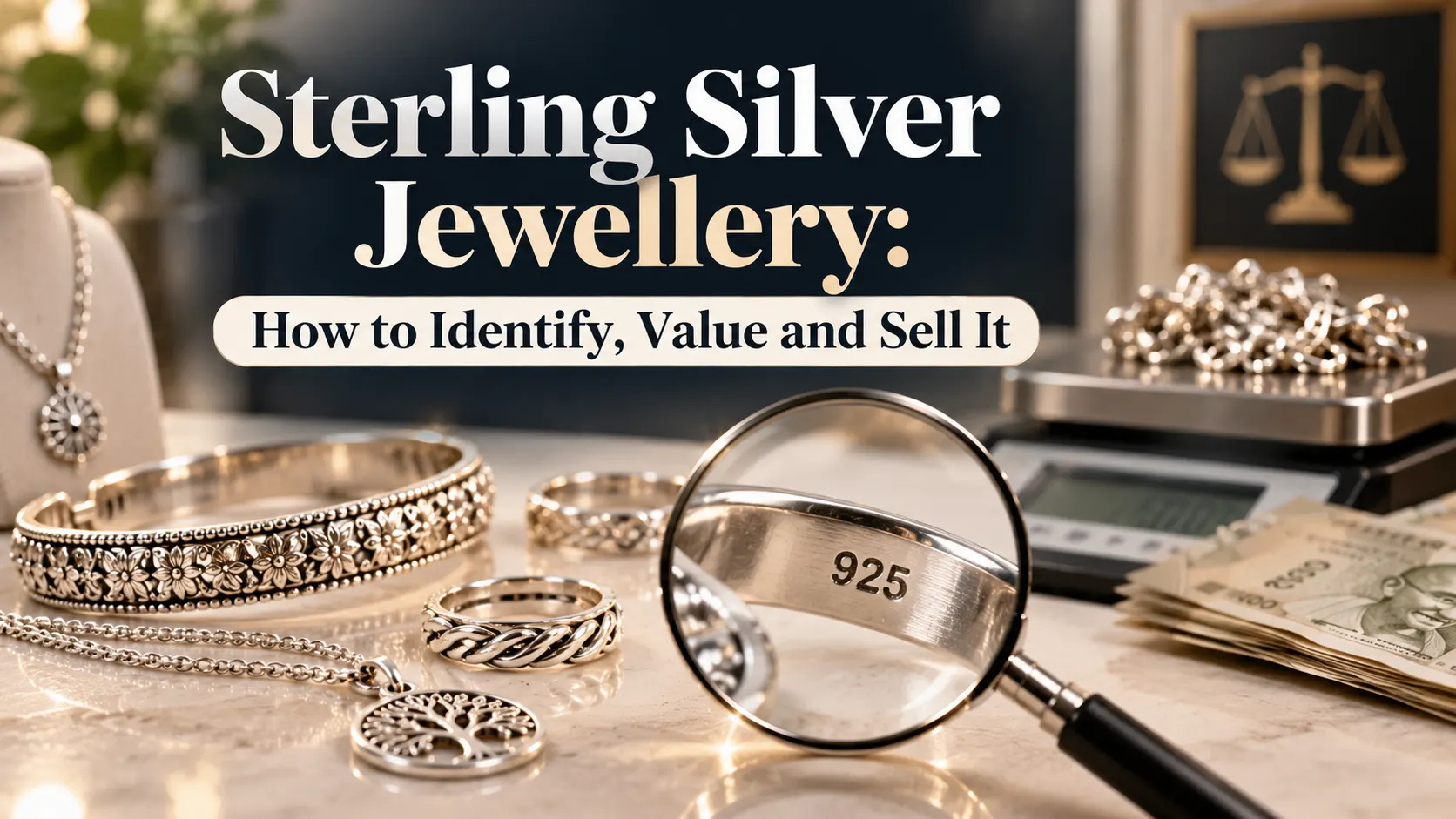
Look on the clasp, the inside of a ring band, the back of a pendant or the tag on a bracelet. Marks that indicate sterling include 925, .925, Sterling and Ster. Be careful with a few look-alikes:
- 800 means 80% silver. It is real silver, but it is not sterling and is worth less per gram.
- EP, EPNS, “silver plate” or “plated” mean a thin layer of silver over a base metal. These carry very little silver value.
- No mark at all does not prove a piece is fake. Some older or handmade items were never stamped, and stamps wear away. Move on to the physical tests.
Quick at-home tests (magnet, ice, polish cloth, skin)
- Magnet: Sterling is not magnetic. If a strong magnet grabs the piece, it is not sterling. A non-magnetic result proves little on its own, since brass and copper are not magnetic either, and steel clasps or springs can fool you.
- Ice: Silver conducts heat extremely well, so an ice cube placed on a sterling piece melts noticeably faster than on plated or base-metal items.
- Polish cloth: Rub gently with a white or light cloth. Black marks are tarnish, which is a good sign for real silver.
- Skin: Sterling contains copper, so some pieces leave a faint grey or greenish mark on skin. This varies from person to person, so give it very little weight.
Avoid DIY acid kits unless you know how to use them safely. For any high-value or uncertain piece, ask a jeweller for a professional acid test or an XRF scan, which reads the exact metal content without damaging the item.
Sterling vs. silver-plated: why it matters
Plated jewellery can look identical to sterling when new. The difference is the money. A plated piece is mostly base metal with a micro-thin silver coating, so its melt value is close to nothing. Sorting sterling from plated before you contact any buyer saves you time and stops you from being disappointed by an offer
Sterling Silver Jewelry Value: How Much Is It Worth in CAD? (Melt Value)
So how much is sterling silver jewelry worth? Start with melt value, which works for any piece you have confirmed as sterling. It also answers the common question of 925 jewelry value, because every sterling item is valued by the same formula.
The melt-value formula
Weight in grams × 0.925 × current CAD silver spot price per gram = melt value
Weigh the piece on a small kitchen or jewellery scale in grams. Multiply by 0.925 to get the weight of pure silver. Then multiply by today’s silver spot price per gram in Canadian dollars, which you can find on a live source such as SilverPrice.org. Because silver moves daily, always recalculate with the current price.
Worked CAD examples
The examples below assume a spot price of CA$2.00 per gram. This is an illustrative rate only, not a current price.
- Chain, 20 g: 20 × 0.925 = 18.5 g of silver × $2.00 = $37.00
- Ring, 6 g: 6 × 0.925 = 5.55 g × $2.00 = $11.10
- Bracelet, 35 g: 35 × 0.925 = 32.375 g × $2.00 = about $64.75
Swap in the live spot price and your own weights to get a real number. Remember that scrap buyers pay a percentage of melt, not the full figure.
What lowers the real silver weight
The weight on the scale is not always all silver. Gemstones, enamel and pearls add weight but no silver value. Weighted or filled items, such as knife handles, candlesticks and some hollow pieces, contain filler material, so the true silver content is lower than the scale suggests. For these pieces, treat your calculation as a maximum.
Melt Value vs. Resale Value: What Your Piece Is Really Worth
Melt value is the floor. It is what a scrap buyer pays, based only on metal weight, purity and the spot price. Sterling silver resale value is a different thing, and for the right pieces it can be far higher.
Resale value can beat melt when a piece has:
- A recognised brand, such as Tiffany, Birks or Pandora
- A known designer or maker
- Age or antique appeal
- Quality craftsmanship or an unusually heavy, well-made build
A Tiffany bracelet or a signed vintage brooch may fetch several times its metal value to the right buyer, while the same item sent for scrap would be paid by the gram and melted down.
To decide which lane a piece belongs in, search for comparable items on eBay and filter to sold listings, which show what buyers actually paid rather than what sellers are asking. If similar pieces sell well above melt, sell it whole. If you cannot find anything comparable, melt value is your realistic number. Check this before you scrap anything potentially collectible, because melting is permanent.
How and Where to Sell Sterling Silver Jewellery in Canada
If you want to sell sterling silver jewelry in Canada, you have three realistic routes. Reputable scrap buyers typically pay roughly 85% to 95% of melt value, while pawn shops often offer far less. Whichever route you choose, get more than one quote.
Local dealers, coin shops and pawn shops
Coin and bullion dealers, and jewellers who buy scrap, are found in most Canadian cities. You get a face-to-face weigh-in, an immediate offer and cash or e-transfer the same day. The trade-off is a lower percentage of spot, as dealers need a margin. Pawn shops are the most convenient but usually the lowest payers. Ask each one how they calculate the offer and whether they weigh in front of you.
Online Canadian silver buyers
Online buyers based in Canada usually work by mail. You ship insured, they weigh and test the pieces, and then they send an offer, which you can accept or decline, often with your items returned if you say no. The process is structured and often pays a better percentage than a local counter, but you wait a few days. Check reviews, insurance terms and payment timelines before you post anything.
Private sale and auction (for collectible pieces)
Branded, designer or antique pieces are best sold as pieces, through online marketplaces, specialist auctions or collector groups. This route has the highest ceiling, since buyers are paying for the item and not the metal, but it takes the most effort: photographing, listing, answering questions, packaging and dealing with fees.
Tips to Get the Most for Your Sterling Silver
- Sort and weigh first. Separate sterling from plated and from weighted or filled items, and write down the weights.
- Get more than one quote. Offers vary widely, so do not accept the first one.
- Do not over-polish antiques. Heavy cleaning can strip patina and reduce a collector’s interest.
- Sell collectible pieces whole. Never scrap something that might be worth more as an item.
- Watch the market. If you are not in a hurry, selling when silver prices are strong lifts your payout
FAQ
Is 925 silver the same as sterling silver?
Yes. “925” is the purity stamp for sterling silver and means the metal is 92.5% pure silver, with the remaining 7.5% usually copper for strength. If a piece is marked 925, it is intended to be sterling, though stamps can be faked, so test valuable pieces.
How much is sterling silver worth per gram in CAD today?
It changes daily with the silver market. To find your figure, take today’s CAD silver spot price per gram from a live source such as SilverPrice.org and multiply it by 0.925. That gives the melt value of one gram of sterling.
Does tarnish or damage lower my sterling silver's value?
Not for melt value. Tarnish, dents and breaks do not change how much silver is in the piece, so scrap buyers pay the same. Condition can matter for collectible or branded items, where heavy damage may reduce what a buyer will pay.
Can I sell sterling silver jewellery for scrap?
Yes. Dealers and online buyers will pay by weight, even for broken or unwanted pieces. Just make sure a piece has no collectible value first, and expect an offer of roughly 85% to 95% of melt value at reputable buyers.
Where can I sell a sterling silver Pandora bracelet in Canada?
Pandora is a recognised brand, so you may do better selling it whole through online marketplaces or local resale groups than scrapping it. Check sold listings for similar bracelets and charms. If nothing sells above melt, a dealer or online silver buyer is the fallback.