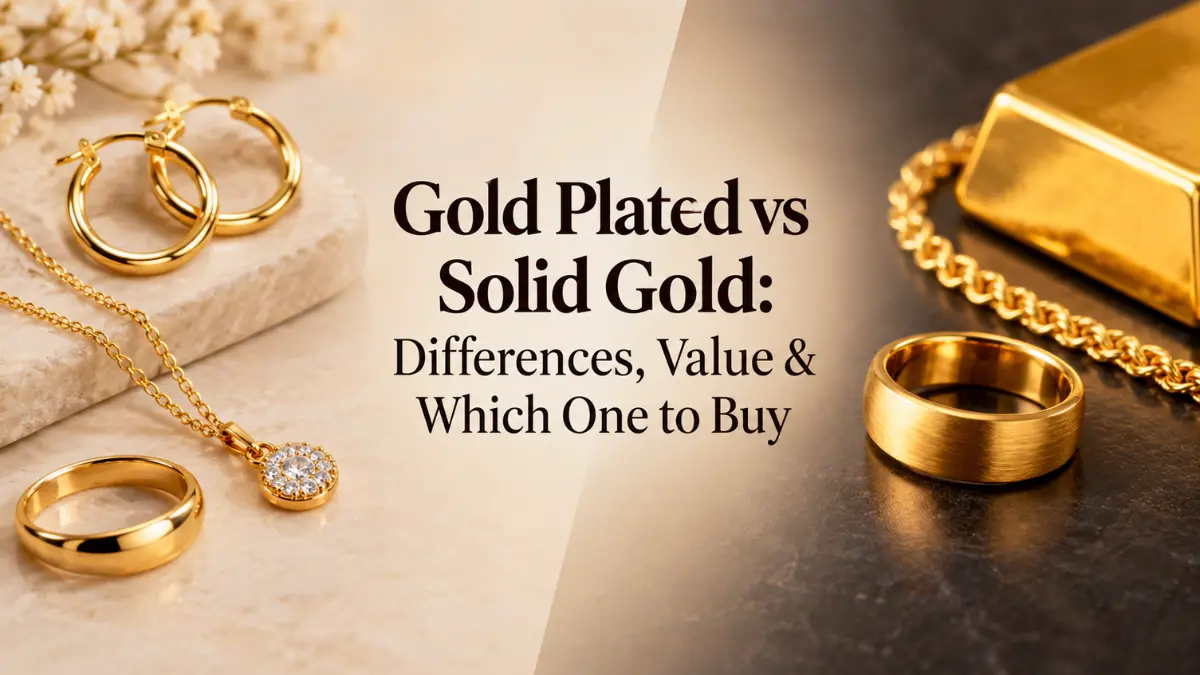
Both types can look identical on the shelf, and that’s exactly where the confusion starts. But once you scratch the surface (sometimes literally), the difference in solid gold vs gold plated jewelry becomes obvious in cost, how long the piece lasts, and what it’s worth if you ever try to sell it. This guide walks through what each one actually is, how they compare side by side, and how to decide which is the smarter buy for you, whether that’s an everyday piece or something you plan to pass down.
Gold Plated vs Solid Gold at a Glance
Before getting into the details, here’s the short version: gold plating gives you the appearance of gold at a fraction of the price, while solid gold is a long-term investment in a material that holds up and holds value. The table below breaks down how the two compare across the factors that matter most when you’re choosing between them.
How to read this comparison: each row highlights a single factor, so you can quickly see where gold plated jewelry wins on affordability and where solid gold wins on longevity and resale.
How to read this comparison
| Comparison | Gold-Plated | Solid Gold / Gold Alloy |
|---|---|---|
| Material | Base metal (brass, copper, or silver) coated with a thin layer of gold | Gold alloyed with other metals all the way through, at a set karat |
| Price | Low to moderate | High, tied to gold’s market price |
| Durability | Coating can wear, scratch, or rub off over months to years | Lasts for decades with normal care |
| Tarnish / Skin Reaction | Can tarnish or turn skin green once the coating thins | Resists tarnish; rarely causes reactions |
| Resale Value | Minimal to none; valued mainly for design, not metal content | Retains real value based on weight and karat |
| Best Suited For | Trend pieces, occasional wear, budget buys | Daily wear, heirlooms, sensitive skin, investment pieces |
What Is Solid Gold?
Solid gold jewelry is made from a gold alloy that runs consistently through the entire piece rather than sitting only on the surface. It’s measured in karats, which describe how much pure gold is mixed with other metals like copper, silver, or zinc.
Karats explained (10k, 14k, 18k, 24k)
Common options are 10 karat, 14 karat, 18 karat, and 24 karat gold. The higher the karat number, the more pure gold is present, and the softer and more yellow the metal tends to look. It’s worth clearing up a common mix-up here: “solid” doesn’t mean “pure.” Even 24 karat gold, the purest form typically sold, is still nearly pure but not fully immune to marking, since jewelers often add trace amounts of other metals for workability.
Where solid gold is used
Solid gold is the standard choice for fine jewellery that’s meant to last, which is exactly why gold rings and wedding bands hold their value long after purchase. Because the gold content runs through the whole item, it can be resized, repaired, or even melted down and reused without losing its underlying value.
What Is Gold Plated Jewelry?
How plating works
Gold plated jewelry starts with a base metal, most often brass, copper, or sterling silver, which is then coated with a thin layer of real gold through an electroplating process. That gold layer is measured in microns, and the thickness varies a lot between brands: some use a heavier coating that lasts longer, while cheaper pieces use a coating so thin it can wear away within months of regular use.
Gold plated vs gold filled vs vermeil
It helps to know how gold plated compares to two similar-sounding terms. Gold filled jewelry uses a much thicker layer of gold that’s mechanically bonded to the base metal, so it lasts considerably longer than standard plating. Vermeil is a specific type of plating that requires sterling silver as the base and a legally defined minimum gold thickness, making it a step up from generic gold plated vs gold pieces in terms of quality and durability.
Key Differences Between Gold Plated and Solid Gold
Composition & purity
Is gold plated real gold? Technically yes, since the outer layer is genuine gold, but it makes up a tiny fraction of the item’s total material. Solid gold, by contrast, is gold alloy from the surface down to the core, which is why the two behave so differently over time despite looking similar at first glance.
Price
Gold plated jewelry is priced mainly for its design and materials cost, not its gold content, which keeps it accessible. Solid gold prices track the current market value of gold itself, plus craftsmanship, so cost rises and falls with the gold market and tends to sit far higher overall.
Durability & lifespan
How long does gold plating last? With daily wear, most plated pieces show visible wear within one to three years, depending on the coating’s thickness and how the piece is treated. Solid gold doesn’t wear away the same way since there’s no thin outer layer to rub off, so it can realistically last generations with basic care.
Tarnishing & skin reaction
Does gold plated tarnish? Once the gold layer thins from wear, the exposed base metal underneath can tarnish, discolor, or react with skin, especially with moisture or sweat. Solid gold resists tarnish naturally and is far less likely to trigger skin sensitivity, making it a more comfortable option for people who wear jewelry constantly or have metal allergies.
Value & Resale: Does Gold Plating Have Value?
This is where the two options really part ways, and it’s the question most buyers care about but rarely get a straight answer to.
Solid gold resale value – how buyers price it
Solid gold resale value is calculated using a fairly transparent formula: the item’s weight, its karat (which determines the percentage of pure gold), and the current spot price of gold. This is often called melt value, since even a badly damaged or outdated piece still holds worth when you sell it for its gold content. Because that spot price is set by global markets and tracked by organizations like the London Bullion Market Association, solid gold resale value tends to hold steady or even climb over time, which is a major reason it’s treated as a store of value rather than just an accessory.
Gold plated jewelry value & resale value
Gold plated jewelry value works very differently. Buyers pay for design, brand, and craftsmanship rather than metal content, since the actual gold used is measured in fractions of a gram spread across the surface. When it comes to gold plated jewelry resale value, there’s typically almost nothing to recover from the metal itself; a jeweller or scrap buyer has little use for a coating too thin to extract profitably, unlike solid gold jewellery . Any resale value that does exist usually comes from the piece being a recognizable or sought-after design, not from the gold in it.
Which One Should You Buy?
There’s no universally “better” choice here. It genuinely depends on how you plan to wear the piece, how often you’ll wear it, and what you want out of it long term. Rather than treating this as a coin flip, it helps to match the piece to the role it will actually play in your jewelry box.
When gold plated is the smart choice
Gold plated jewelry is the smarter buy when you want to follow a trend without committing serious money to it. Fashion pieces, statement jewelry, and anything tied to a seasonal or short-lived style all make sense in plated form, since you’re unlikely to wear them long enough for the coating to matter. It’s also the better option if you like switching up your jewelry often and want variety without a big spend, or if you’re buying for occasional wear rather than daily rotation, such as an evening piece that only comes out a few times a month. Budget is the other clear signal: if you simply want the gold look at a price that doesn’t sting if a piece gets scratched, tarnishes, or goes missing, plated jewelry gives you that flexibility without the financial risk solid gold carries.
When solid gold is worth it
Solid gold earns its higher price tag when a piece is going to see daily wear, since it holds up to constant contact with skin, lotion, sweat, and water in ways plated jewelry simply can’t. It’s also the better choice for anyone with sensitive skin, as it’s far less likely to cause irritation or discoloration over time. Beyond comfort and durability, solid gold makes sense whenever a piece carries real financial or sentimental weight: engagement rings, wedding bands, and anything meant to become a family heirloom all warrant the investment. And because solid gold retains genuine resale value tied to its weight and karat, it’s the right call whenever you want a piece you could realistically resell, regift, or pass down, rather than one that only looks the part.
How to Tell Gold Plated from Solid Gold
If you’re evaluating a piece you already own or considering a purchase, a few quick checks can point you in the right direction:
- Check for hallmarks or stamps: Solid gold is typically stamped with its karat (like 14k) or purity number (like 750), while plated pieces are often marked GP or GF.
- Try a magnet test: Pure gold and most gold alloys aren’t magnetic, so if a piece is strongly attracted to a magnet, the base metal underneath is likely doing most of the work.
- Discoloration/wear at edges: Look for discoloration or wear at edges and high-contact points, such as ring bands or clasp areas, where plating tends to thin out first.
- Feel the weight: Solid gold is denser than most base metals, so a piece that feels unusually light for its size may be plated rather than solid.
- When in doubt, get it professionally tested: A jeweler can run an acid or electronic test to confirm gold content with certainty.
Conclusion
Gold plated jewelry gives you the look of gold at a price that’s easy to justify for trend pieces or occasional wear, but that coating is temporary and carries little resale value once it wears through. Solid gold costs more upfront, but it lasts, resists tarnish, and keeps real value tied to the gold market itself. If you wear a piece daily or want something you could resell or hand down, solid gold is the better long-term choice. If you just want to try a style without committing, gold plated does the job.
FAQ
Is gold plated real gold?
Yes, in the sense that the outer layer is genuine gold applied through electroplating. However, it’s only a thin coating over a base metal core, so the item as a whole contains far less actual gold than a solid gold piece of the same size and design.
Does gold plating have any value?
The gold layer itself has a very small material value since it’s measured in fractions of a gram. Most of a gold plated item’s worth comes from its design, brand, and craftsmanship rather than the gold content, which is why it doesn’t hold resale value the way solid gold does.
Does gold plated jewelry tarnish?
It can, particularly once the gold layer wears thin enough to expose the base metal underneath. Moisture, sweat, and everyday friction speed this up, so plated pieces often need more careful storage and less frequent wear to stay looking their best.
How long does gold plating last?
With regular wear, most gold plated jewelry starts showing visible wear within one to three years, though this varies based on the thickness of the plating and how carefully the piece is worn and stored. Thicker plating and vermeil pieces generally last longer than standard plated jewelry.
Does solid gold hold its resale value?
Yes. Because solid gold’s worth is based on its weight and karat measured against the current gold spot price, it tends to retain or even grow in value over time, unlike plated jewelry, which loses most of its practical value once the coating wears away.