
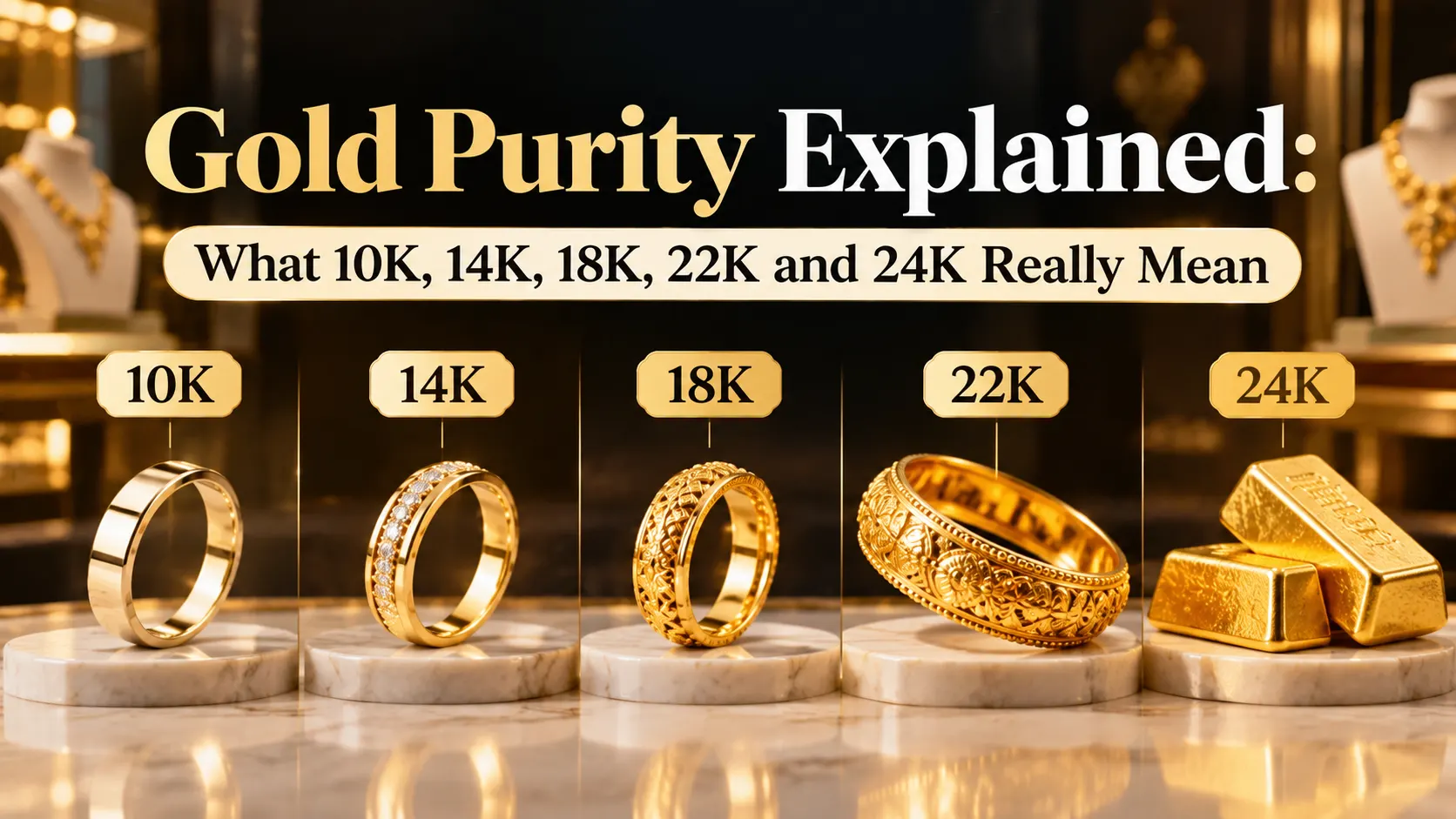
A tiny 14K, 750 or 585 stamp inside a ring can tell you a lot once you know how to read it. Gold purity describes how much of the metal is actual gold and how much comes from other metals.
In the US, gold purity is measured in karats, written with a K. Carat measures gemstone weight. The same piece may also carry a fineness number, such as 750, which expresses its gold content on a 1,000-part scale.
The chart below shows how karats, percentages and fineness match. It also explains what 10K, 14K, 18K, 22K and 24K mean for color, durability and common jewelry uses.
What Is Gold Purity?
Gold purity is the proportion of actual gold in a metal compared with the other metals mixed into it.
If you are wondering what is pure gold, 24K is the highest-purity form commonly used in jewelry and bullion. Pure gold has little to no alloy metal added. In practical commercial use, 24K gold is commonly represented as 999 or 999.9 fineness.
Pure gold is soft and highly malleable. It is easy to shape and can scratch, bend and wear more easily than lower-karat alloys.
Gold used in everyday jewelry is often mixed with metals such as silver, copper and zinc. These alloys make the metal harder and can also change its color. The FTC guidance on gold jewelry notes that 24K gold is soft and is commonly mixed with other metals to increase hardness and durability.
Purity is usually expressed in two ways. The karat system divides the metal into 24 parts. The fineness system measures gold in parts per 1,000. Both describe how much gold is present in the metal.
Gold Karat and Fineness Scale (What the Numbers Mean)
To understand gold karat meaning, read the number as parts out of 24. An 18K piece contains 18 parts gold and 6 parts other metals. Dividing 18 by 24 gives 75%, so 18K gold is 75% gold.
Gold fineness expresses the same purity on a 1,000-part scale. A 750 mark means 750 parts out of 1,000 are gold, or 75%.
Karat, percentage and fineness describe the same gold content in different ways. The chart below compares the main gold purity levels by karat, percentage and fineness.
Karat | Gold Purity (%) | Fineness / Stamp |
|---|---|---|
24K | 99.9% | 999 |
22K | 91.7% | 916 |
18K | 75% | 750 |
14K | 58.3% | 585 |
10K | 41.7% | 417 |
The percentage comes from dividing the karat number by 24. Fineness moves that proportion to a 1,000-part scale. A common 585 stamp on 14K jewelry represents a commercial fineness of about 58.5%, while the mathematical 14/24 ratio is about 58.3%.
Each Gold Purity Level Explained
24K Gold (99.9%, pure gold)
24K is the highest pure gold level in this group and is commonly marked 999 or 999.9. It has a deep yellow color because very little alloy metal is present.
Its high purity also makes it softer than 22K, 18K, 14K or 10K gold. Rings and bracelets worn often can pick up scratches or bend more easily, especially when the design is thin.
In Canada , 24K is often associated with gold bullion, investment products and some culturally significant jewelry. If you are checking an investment piece, compare its weight and purity with the current gold price.
A 24K stamp tells you the gold content. The item’s dollar value also reflects its weight and the current gold price.
22K Gold (91.7%)
22K gold contains 22 parts gold and 2 parts other metals, giving it about 91.7% gold content. A common fineness mark is 916.
Its color stays close to the deep yellow of 24K because the alloy portion is small. The added metals make 22K harder than 24K. It remains softer than 18K and 14K.
22K is less common in mainstream US everyday jewelry than 14K or 18K. It is widely used in South Asian and Middle Eastern jewelry traditions, including pieces bought and worn in the United States.
22K is commonly chosen for pieces where high gold content and a strong yellow color are priorities. Rings and bracelets worn every day can scratch or bend more easily in 22K gold.
18K Gold (75%)
18K gold contains 18 parts gold and 6 parts alloy metals. That equals 75% gold and is commonly shown by a 750 fineness stamp.
It keeps a strong yellow-gold color while the larger alloy portion gives it more resistance to bending and scratching than 22K or 24K.
The exact shade changes with the metals used in the alloy. White, yellow and rose 18K gold all contain the same proportion of gold when correctly described as 18K.
In the US, 18K is commonly used in fine jewelry, wedding bands and engagement rings. It contains more gold than 14K and is harder than 22K or 24K.
14K Gold (58.3%)
14K gold contains 14 parts gold and 10 parts other metals. Mathematically, that is about 58.3% gold. A common fineness stamp is 585.
14K is widely used for everyday jewelry in the United States, including rings, chains, earrings and bracelets. Its hardness makes it practical for pieces worn regularly. Yellow 14K gold is usually lighter in color than 18K or 22K because it contains a higher proportion of alloy metals.
Color does not determine purity by itself. A 14K white-gold ring and a 14K yellow-gold ring have the same nominal gold content even though their alloy mixtures and appearance differ.
10K Gold (41.7%)
10K gold contains 10 parts gold and 14 parts other metals, or about 41.7% gold. A common fineness mark is 417.
Its relatively high alloy content makes it harder than the higher-karat options and usually gives yellow 10K gold a paler color.
Older US guidance is sometimes summarized as treating 10K as the minimum standard for gold jewelry. That is no longer the current federal rule. In 2018, the FTC revised its Jewelry Guides and removed the previous 10K minimum threshold. FTC guidance on the 2018 Jewelry Guides revision explains the change. Marketers can describe gold alloys below 10K using a gold term when they accurately and conspicuously disclose the karat fineness.
10K is commonly used for jewelry made for frequent wear, including rings, chains and bracelets.
How to Read a Gold Purity Hallmark or Stamp
A purity stamp usually gives you either a karat number or a fineness number.
The common matches are:
- 10K ↔ 417
- 14K ↔ 585
- 18K ↔ 750
- 22K ↔ 916
- 24K ↔ 999
A ring is often marked on the inside of the band. On a chain or bracelet, the mark is commonly placed near the clasp or on a small attached tag.
The FTC guidance on gold jewelry markings tells US consumers to look for the karat quality mark and for the name or US registered trademark of the company standing behind it. The FTC Jewelry Guides advise marketers on how to describe gold content and karat fineness without making deceptive claims.
A stamp is a claim about the metal, not independent proof that the piece matches the mark. If authenticity is uncertain, learn how to tell if gold is real before relying on the hallmark alone. Professional testing can confirm the metal’s purity.
Which Gold Purity Should You Choose?
The right gold purity changes with how you plan to use the piece.
- Everyday jewelry: 14K contains more alloy metal than 18K, 22K or 24K, making it harder and better able to handle frequent wear.
- Special or heirloom pieces: 18K gives you a higher gold percentage and a stronger yellow color while remaining harder than 22K and 24K.
- Investment or cultural gifting: 22K and 24K put more of the item’s metal content into gold itself. Their higher purity also makes them softer.
- Durability-first jewelry: 10K contains the highest proportion of alloy metal among these five levels and can handle frequent wear well.
As purity rises, the proportion of alloy metal falls. Higher-karat gold usually has a deeper yellow color, more gold content and greater softness.
Regular cleaning and storage also affect how a piece holds up over time. A guide to caring for gold jewelry can cover cleaning methods, storage and everyday maintenance in more detail.
FAQ
Is 24K gold better than 18K or 14K?
24K contains the most gold and has the deepest yellow color of these common purity levels. It is also the softest. 18K and 14K contain more alloy metal, which makes them harder and more practical for rings, bracelets and other pieces worn regularly.
What is the difference between karat and carat?
Karat, written as K, measures gold purity. A 14K piece contains 14 parts gold out of 24. Carat measures the weight of gemstones such as diamonds. One carat equals 200 milligrams.
What does 750, 585 or 417 stamped on gold mean?
Those numbers are fineness marks. They show how many parts out of 1,000 are gold. A 750 stamp means about 75% gold and corresponds to 18K. A 585 stamp is commonly associated with 14K, while 417 corresponds to 10K. Use the karat and fineness chart above to match other marks.
Is higher-karat gold always worth more?
For two pieces of the same weight, the higher-karat piece contains more gold. The final value can also reflect total weight, craftsmanship, brand, gemstones and condition. Karat tells you the proportion of gold in the metal, not the piece’s full retail or resale value.